Best practices
Here are some best practices to offer the best user experience for your integration.
Enable audio
-
Since browsers prevent audio from playing without user action, add an easy to identify "enable audio" button that your users can click, which calls the Video SDK
startAudiofunction. Be sure to tie this to a real user action, like a button click, so audio initiates successfully within the browser.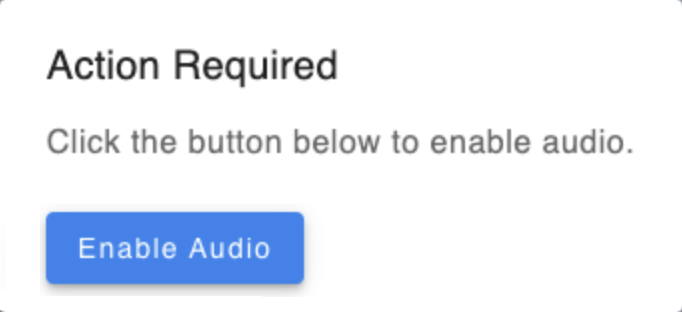
Show status
-
Animate the microphone when users speak. This helps users visualize that their mic is capturing their voice successfully.

-
Show users' microphone statuses so everyone can see that a user is muted, unmuted, or that they have not "enabled audio".
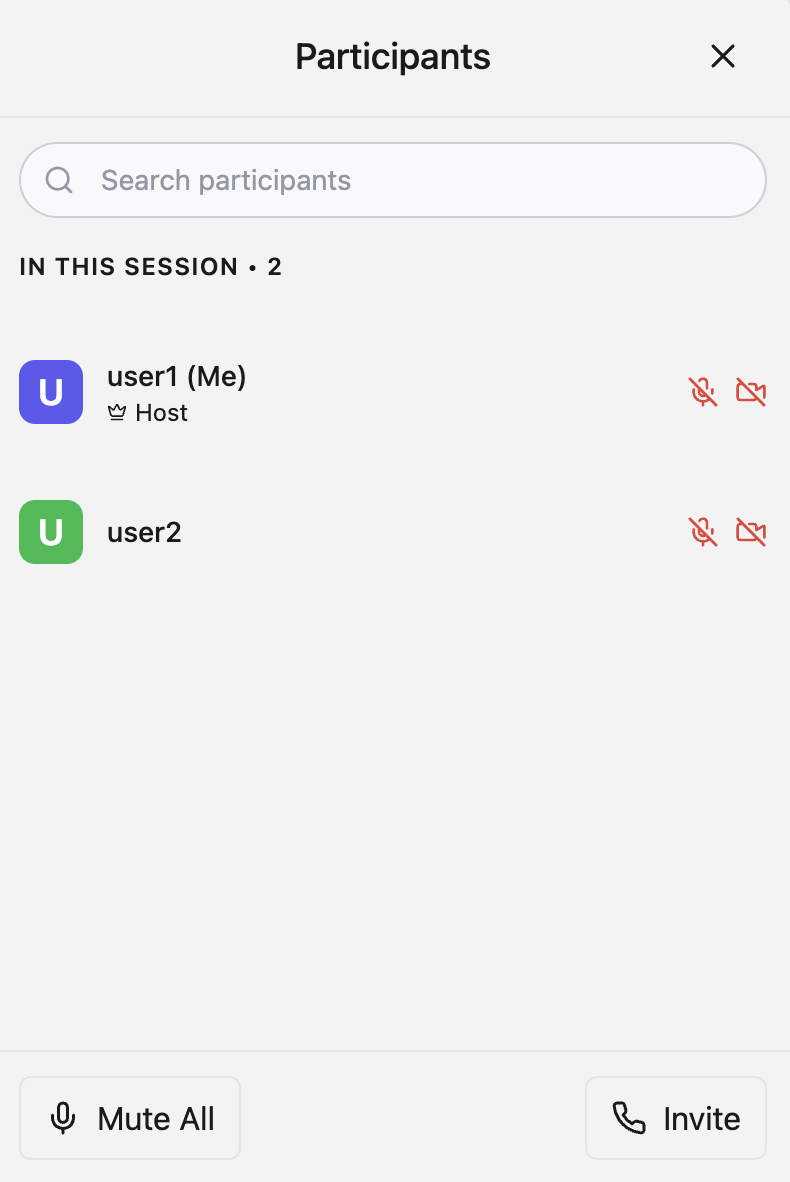
-
Highlight the active speaker. If you have multiple users in the session, use the active speaker event to spotlight them in your UI, or border their video so everyone can visualize who is speaking.
Audio device options and status
-
Provide the option to choose a microphone and speaker (if supported in the browser, see caniuse.com for the AudioContext API: setSinkId). This allows the end user to switch to their headphones or choose their desired microphone device.
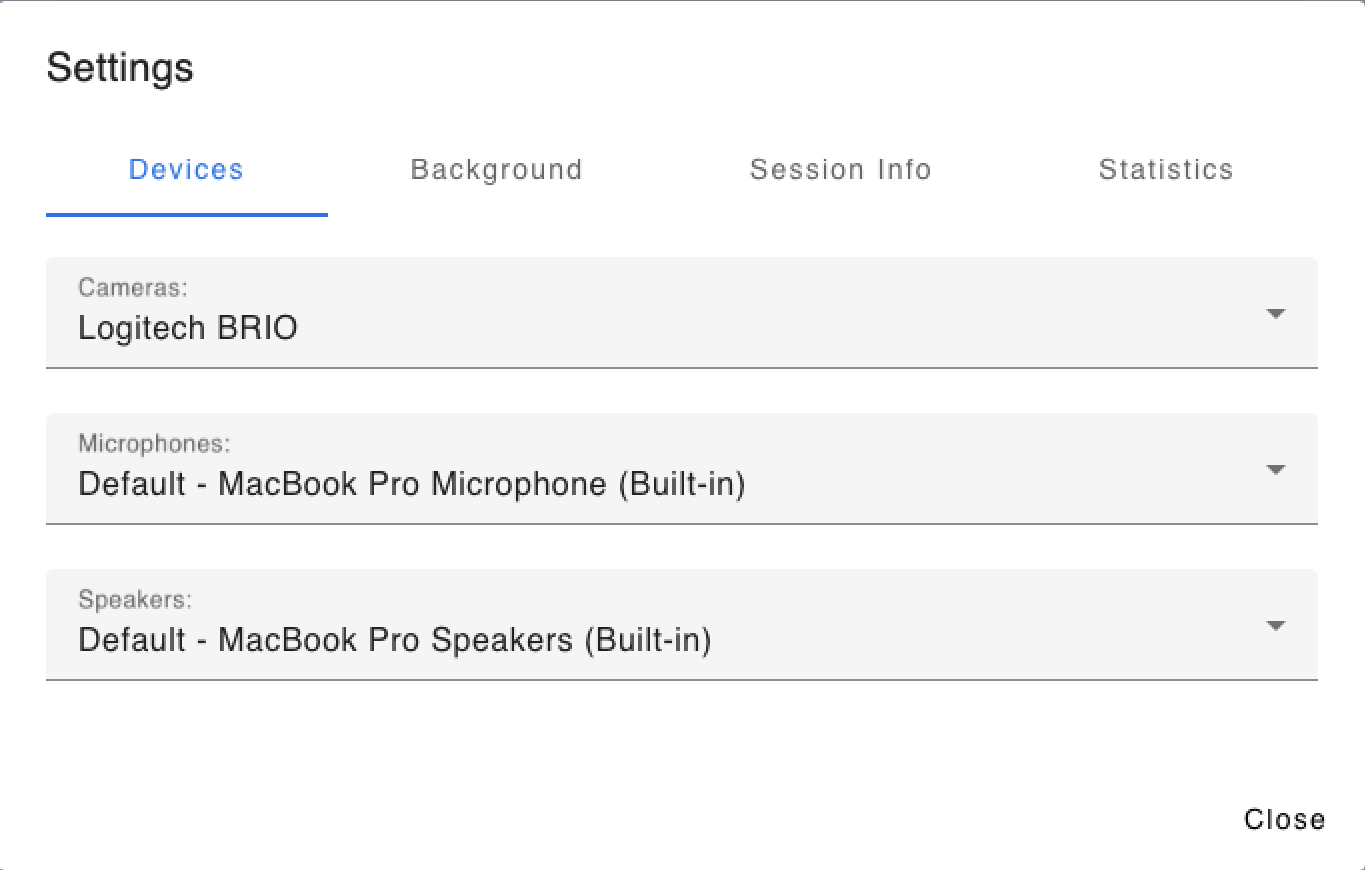
-
Add support for hot plugging and unplugging. Use the
device-changeevent listener to listen for when a microphone is plugged in or unplugged. This can be useful to notify the user if their headphones run out of battery, loose connection, or for easily switching to a new device when one is connected or plugged in. Seedevice-changein event handling for details. -
Use the
current-audio-changeevent to display a message to ask the user to reconnect audio if they left audio for any reason, such as to take a phone call or play music. If they use another app for audio, it disconnects the SDK from audio and they need to reconnect. The user may not know this unless you tell them. Seecurrent-audio-changein event handling for details.
Permission changes and errors
- Handle system and browser permission errors, for example, if the end user has not granted camera access within the browser or webpage, or they have denied access, display the error and a call to action to the end user. You can also show a notification to the other users that this user is having trouble with allowing their camera to be enabled.
- If session audio and video stop working due to a permission change, for example, perhaps the user disabled audio permission in Chrome, you can use the
permission-changeevent to detect this and message the user to authorize permission again.
Support for Chrome <permission> element
Zoom supports the <permission> element in Chrome to give users contextual control over access permissions. Use it to enable the user to trigger the microphone and camera permission prompt in the browser by clicking it (it appears as a button).
<style>
    permission {
        background-color: lightgray;
        color: black;
        border-radius: 10px;
    }
</style>
<permission type="geolocation"></permission>
This requires the origin trial Trial for Page Embedded Permission Control - Cam/Mic/Geolocation. See the following resources for details.