Creating Apps for Digital Signage
Creating apps for Zoom Digital Signage follows the standard process for creating a Zoom app. In this article, we call out only information specific to creating apps for Zoom Digital Signage.
Ensure you have read Create a Zoom app before continuing.
Prerequisites
- You have read Before you start .
- You have read Create OAuth client apps for users.
- You have a Zoom account.
- Zoom Apps SDK 0.16.8 or higher.
- Zoom Rooms client 5.13.1 or later.
- Zoom Desktop client 5.13 or later.
- You are either the Zoom account owner, account admin, or have been assigned the Zoom for developers role.
- The administrator has enabled view and edit permissions for the Zoom for developers role. To enable permissions for roles, log into the Zoom web portal and go to User Management > Roles > Role Settings > Advanced features, and select the View and Edit checkboxes for Zoom for developers. For more information, see Using role management.

Step 1 - Create a general Zoom app
Follow the instructions in the Quick Start Guide to create a general app. Make these selections to create an app for Zoom Room Controllers:
-
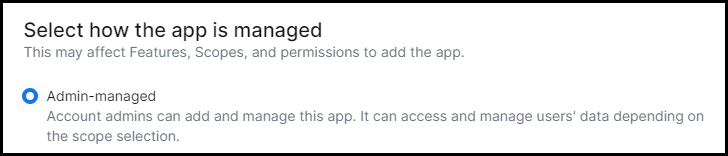
On the Basic Information page, under Select how the app is managed, select Admin-managed.
-
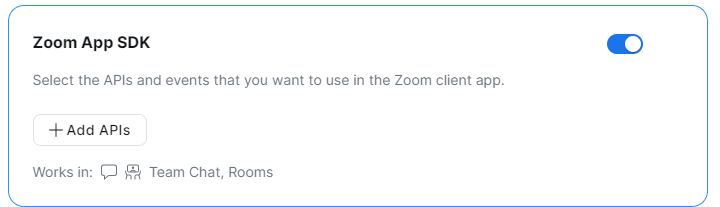
On the Features page, Surface, In-client App Features, enable Zoom App SDK. Select Add APIs and add the APIs and events used by your app.
-
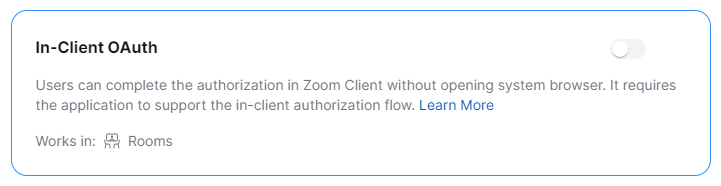
(optional) Enable In-client OAuth to allow users to complete the authorization process in the client.
-
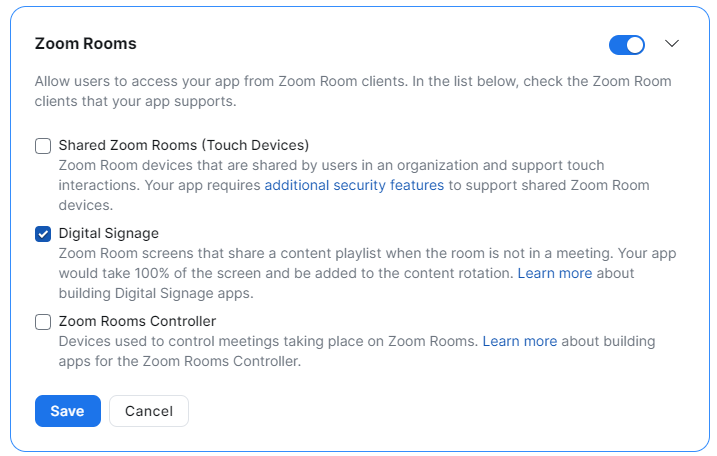
On the **Features **page, go to Surface > Zoom Client Support, enable Zoom Rooms, and select Digital Signage.
Complete the steps in Create OAuth client apps for users and then proceed to Step 2.
Step 2 - Request access to the Zoom Apps SDK
Contact Zoom and request they enable access to the Zoom Apps SDK for your app.
Step 3 - Download and install the Zoom Apps SDK
Download and install the Zoom Apps SDK v0.16.8.
Step 4 - Get the Zoom Room context
In your app, use the 'getZoomRoomContext()' method to get the device ID and room information from the Zoom Room device.
Example usage: zoomSdk.getZoomRoomContext()
Data inputs: None
Data outputs:
deviceId(string) - id of the Zoom Room deviceroomId(string) - id of the Zoom Room