AI Builder's Night recap: exploring the future of AI development
On August 13th, the Zoom Developer Ecosystem hosted their first ever Developer Meetup, the AI Builder's Night at the Zoom HQ in San Jose.
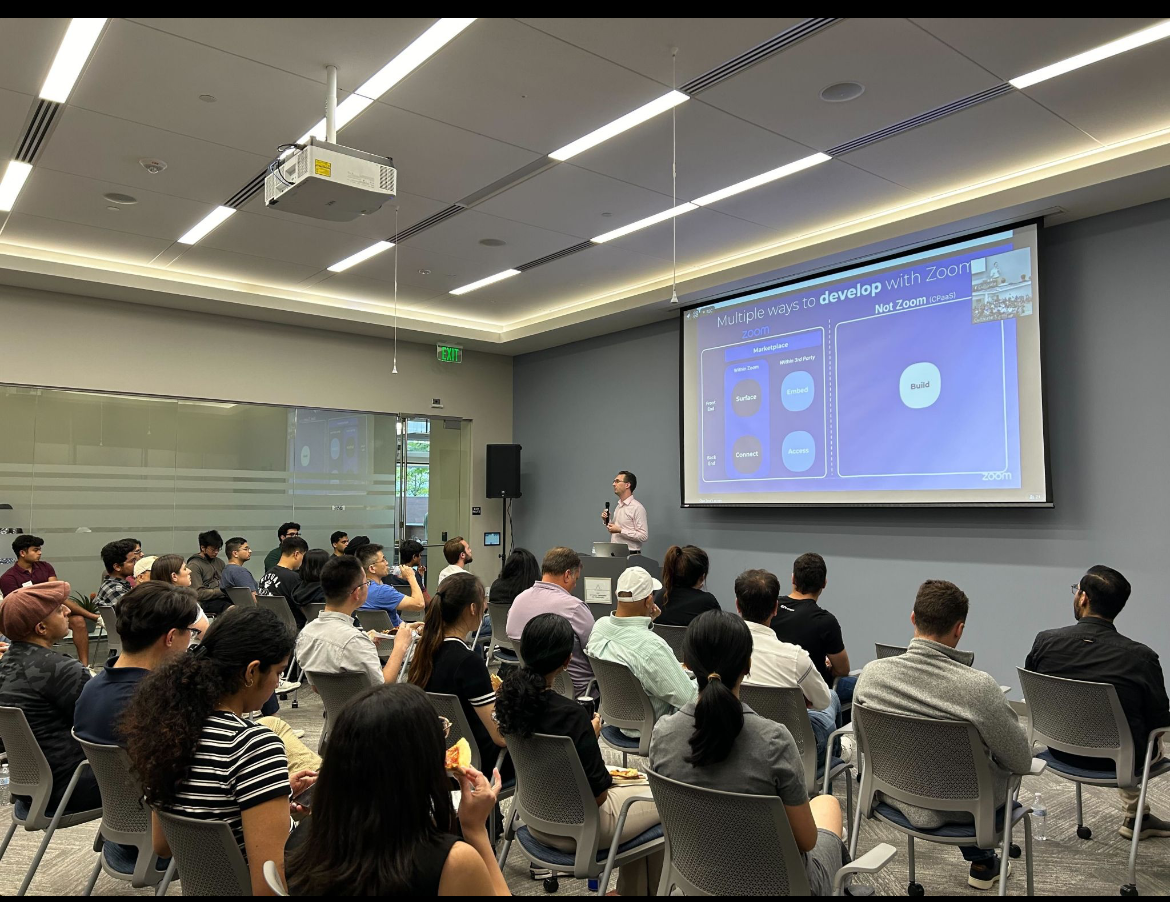 AI enthusiasts gathered for an evening of learning, networking, and exploration of cutting-edge AI technologies. Attendees included 130 developers and product managers, along with 25 online participants. People came from as far as Antioch to connect with fellow developers and hear from some of the brightest minds in the industry.
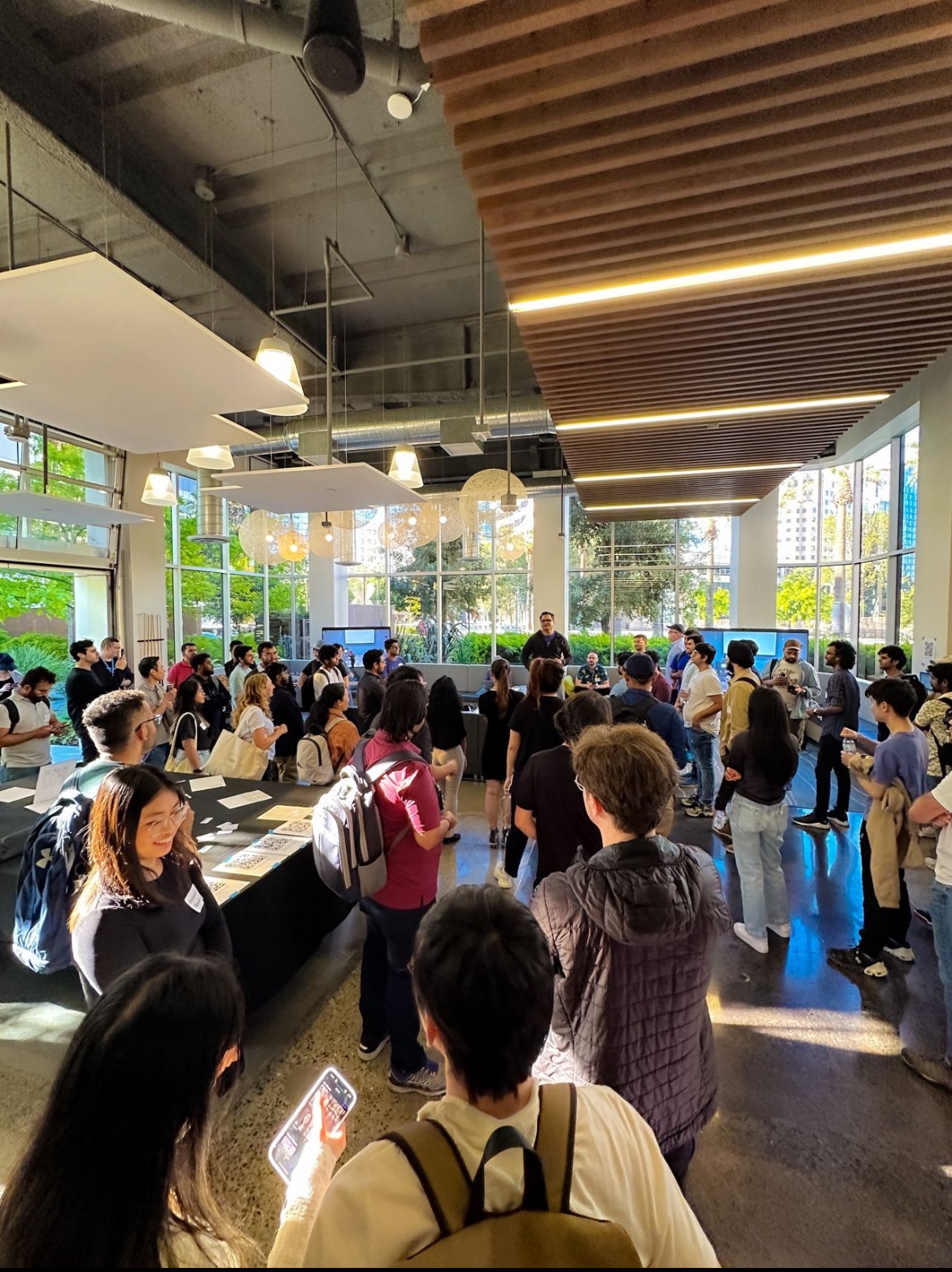
The night was packed with insights from industry leaders who didn't just present ideas—they dove deep into the technologies shaping our future.
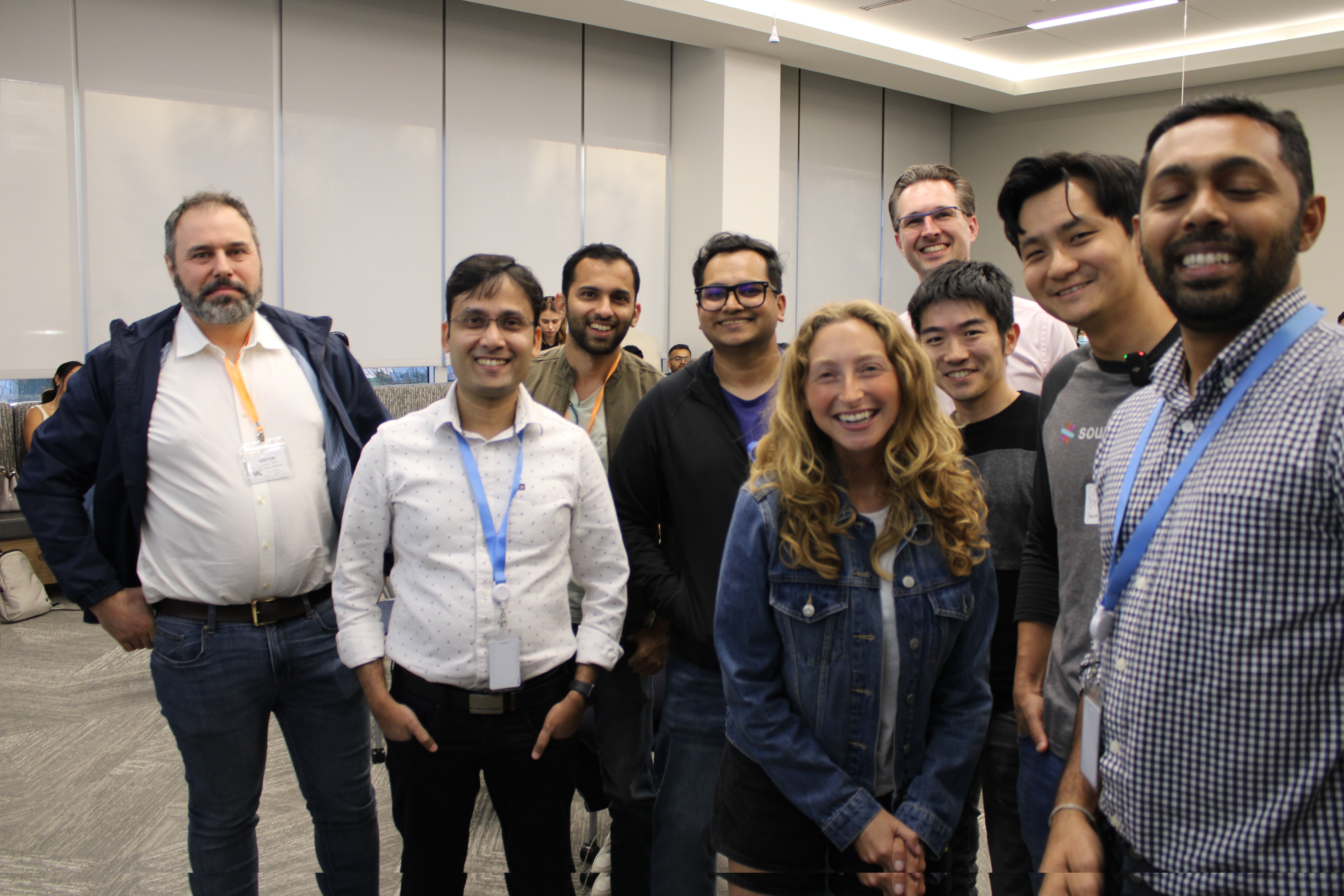
Here's a recap of the lightning talks that left everyone buzzing with inspiration and new ideas:
Welcome address from Brendan Ittelson, Zoom's Chief Ecosystems Officer
Brendan Ittelson, Zoom's Chief Ecosystem Officer, set the tone for the evening with a warm and inspiring welcome address. As someone who has been instrumental in shaping Zoom's developer ecosystem, Brendan emphasized the importance of collaboration and innovation in driving the future of AI. He shared insights on how Zoom is evolving as an AI-first company, focusing on empowering developers to create the next generation of applications that will transform industries.
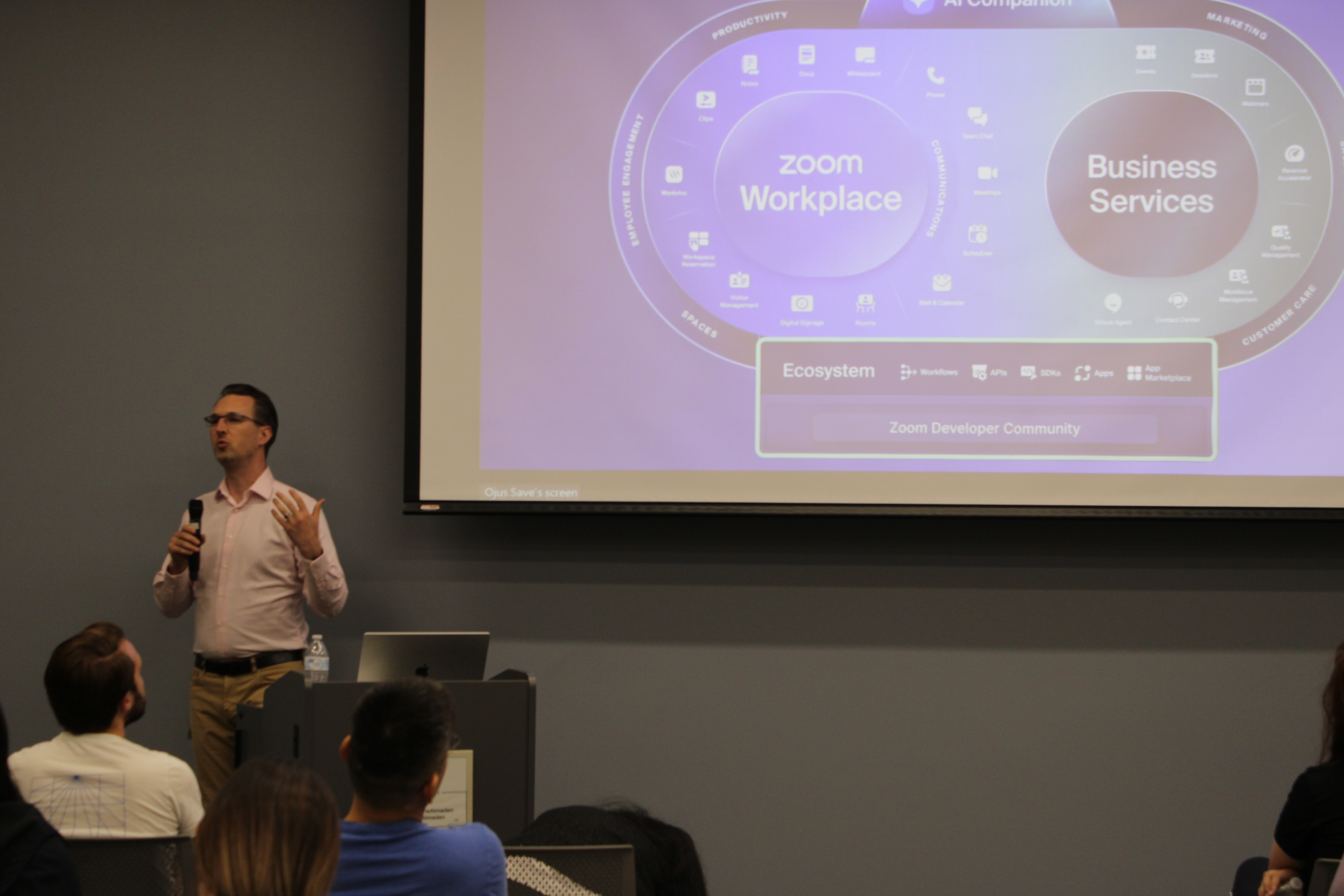
Brendan's message was clear: AI is not just a buzzword at Zoom—it's at the heart of the company's strategy moving forward. He highlighted how the tools and platforms Zoom is building are designed to support developers in harnessing the full potential of AI, making it easier to integrate intelligent features into their products.
His address set the stage for an evening of insightful talks, reinforcing the idea that collaboration between technology and people is key to driving innovation.
The views and opinions expressed by the speakers are their own and do not necessarily reflect those of Zoom or its affiliates. The content presented by each speaker is their responsibility, and Zoom assumes no liability for any consequences arising from the use of or reliance on this information.
Chat Oriented Programming: Beyang Liu, CTO of Sourcegraph
Beyang Liu introduced "Chat Oriented Programming" (CHOP), an approach where developers utilize AI-powered chat interfaces to manage coding tasks. This method aims to streamline the development process by automating routine tasks such as code generation, debugging, and refactoring.
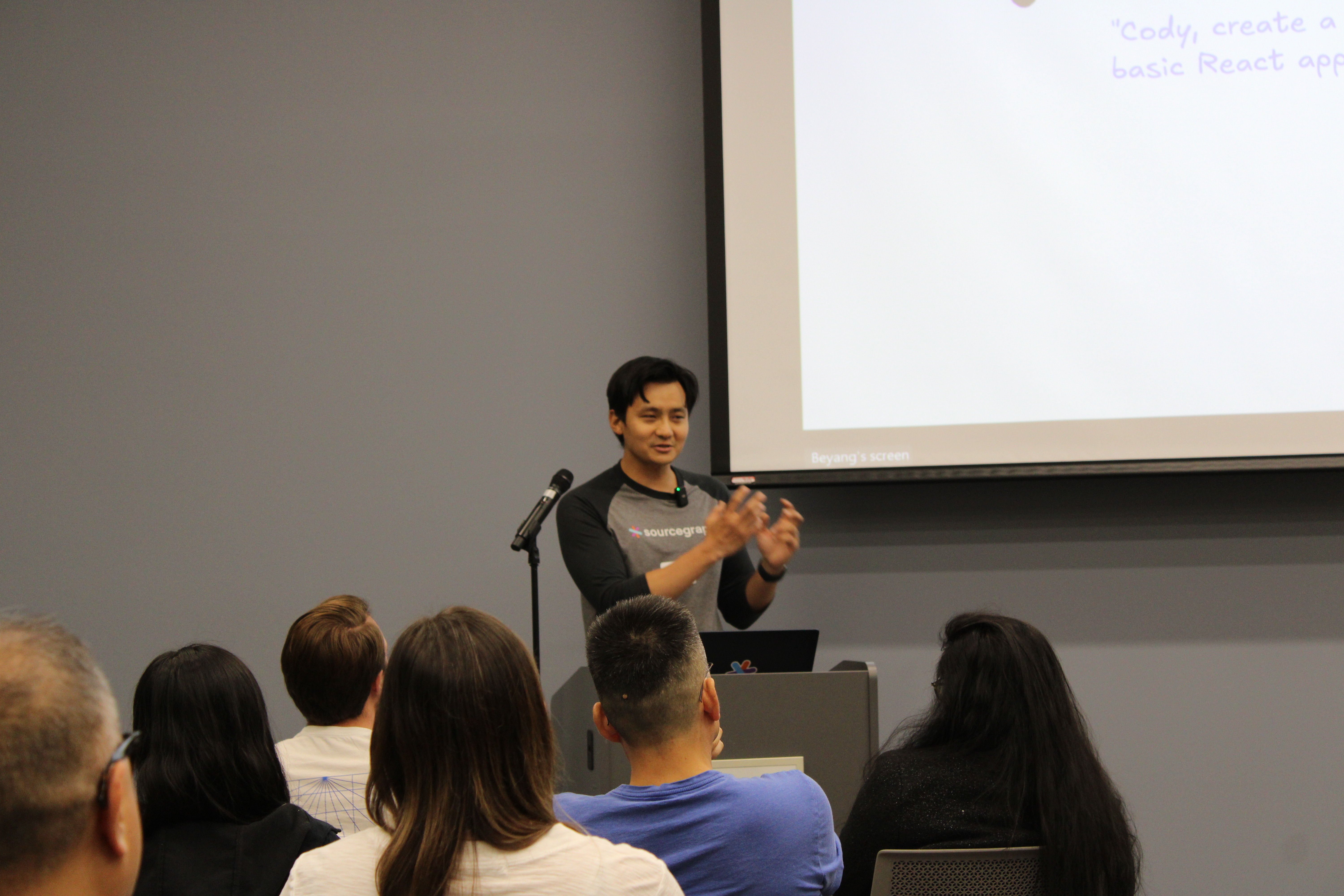
CHOP centers on integrating AI into the development environment, enabling real-time, contextual code suggestions. This interaction between developers and AI tools is designed to make programming more accessible and efficient.
The adoption of CHOP could fundamentally change how developers interact with their tools, making programming more efficient and less error-prone. As this approach grows, it may become a standard feature in development environments.
AI Predictions for Engineers: Dani Grant, CEO of Jam.dev
Dani Grant's talk explored the future of AI through the lens of Carlota Perez's framework on technological revolutions.
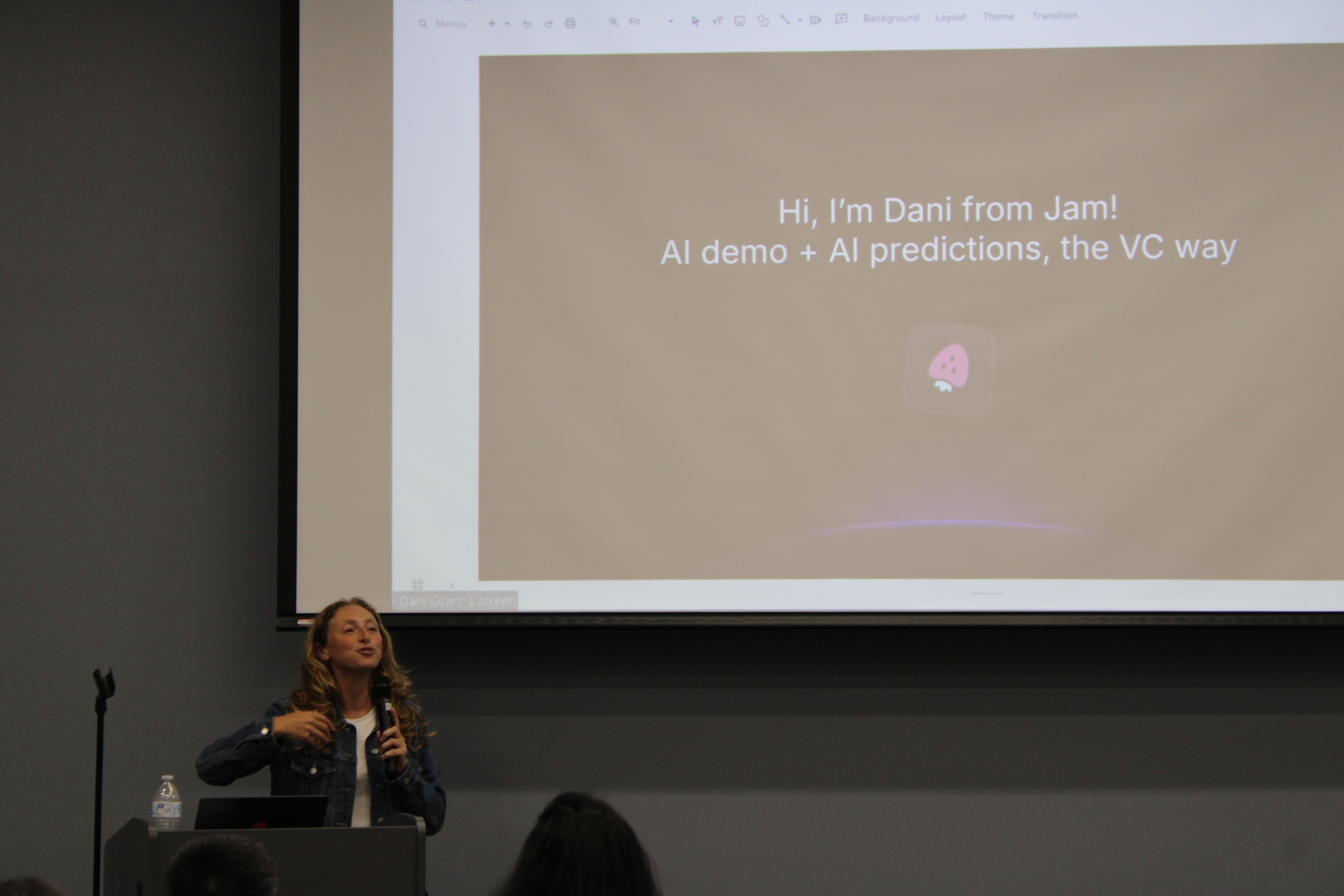
Dani compared the current AI frenzy to the dot-com bubble, suggesting that while a crash is likely inevitable, it will pave the way for AI to become integrated into every aspect of society.
By connecting everything to AI, Dani predicted, we will see a transformation as profound as the one brought by the web—changing how we live, work, and interact with the world. Her talk was both a warning and a roadmap, urging engineers to understand these cycles to strategically position themselves for the future.
Advancements in Voice AI: Building Inclusive Systems: Dr. Nauman Dawalatabad, AI Research Scientist at Zoom
Dr. Dawalatabad's presentation focused on the latest advancements in Voice AI, with a particular emphasis on speech recognition and natural language processing. He discussed Zoom's efforts to make voice-activated systems more responsive, accurate, and inclusive.
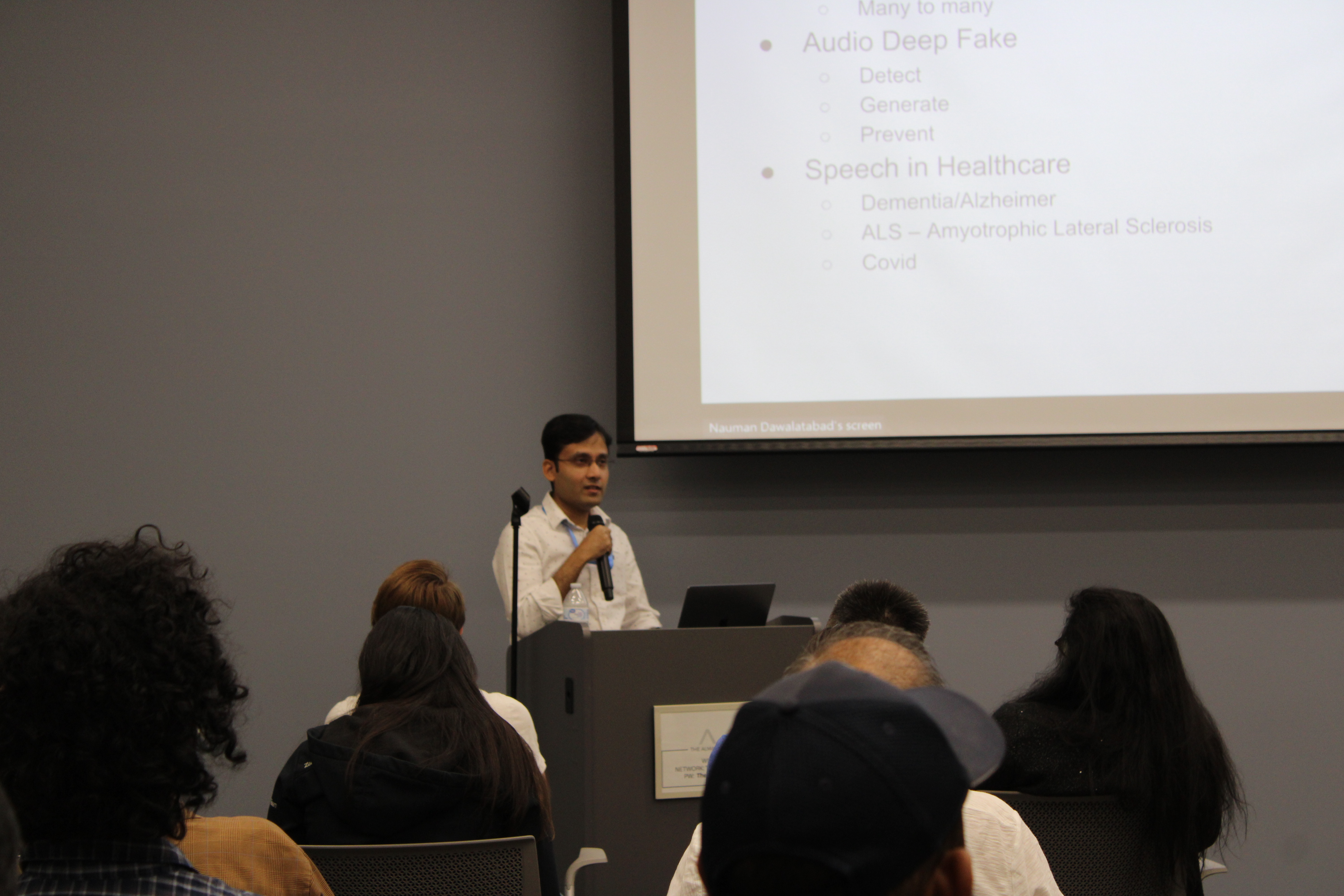
The talk covered the challenges of improving Voice AI's ability to understand diverse accents and languages, which is crucial for making these systems globally accessible.
Enhancing the accuracy of voice recognition across different languages and accents remains a significant technical challenge. These improvements are essential for creating a truly inclusive user experience.
As Voice AI becomes more integral to user interfaces, these advancements will play a critical role in making technology more accessible and user-friendly across the globe.
RAG Security: Indirect Prompt Injection through Vector Database: Sachin Dharashivkar, CEO of Trojan Vectors
Sachin Dharashivkar's presentation highlighted the emerging threat of indirect prompt injection attacks via vector databases, a novel and potentially dangerous security issue in the AI landscape. As AI systems increasingly rely on vector representations, the risk of these types of attacks becomes more significant.
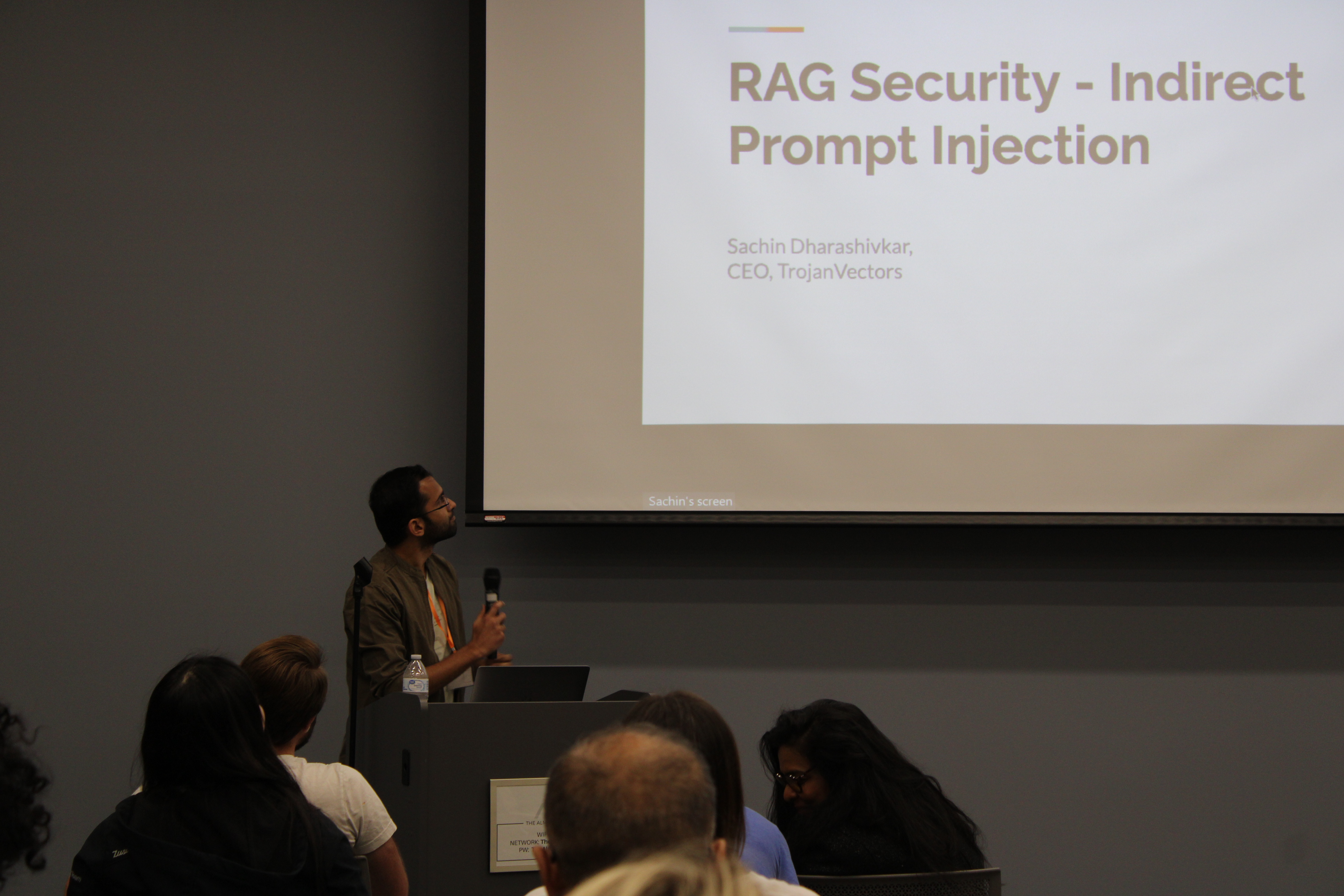
The talk explored how these attacks exploit vulnerabilities in the way AI models handle vector data, potentially leading to manipulated outputs. Sachin emphasized the importance of detecting and mitigating such attacks in real-time, a challenging task given the sophisticated nature of these threats.
Sachin introduced innovative methods for filtering and detecting anomalous vector data, which could indicate an attempted injection attack. These security measures are crucial as vector databases become more integral to AI systems.
As the adoption of vector databases grows, robust security measures will be essential to prevent potential exploits and ensure the integrity of AI systems.
Cloud AI Performance: Ben Sand, CEO of Strong Compute
Ben Sand's talk focused on optimizing AI performance in cloud environments, an area that is critical for companies deploying large-scale AI solutions. He discussed the challenges of balancing high-performance AI tasks with the cost constraints of cloud infrastructure.
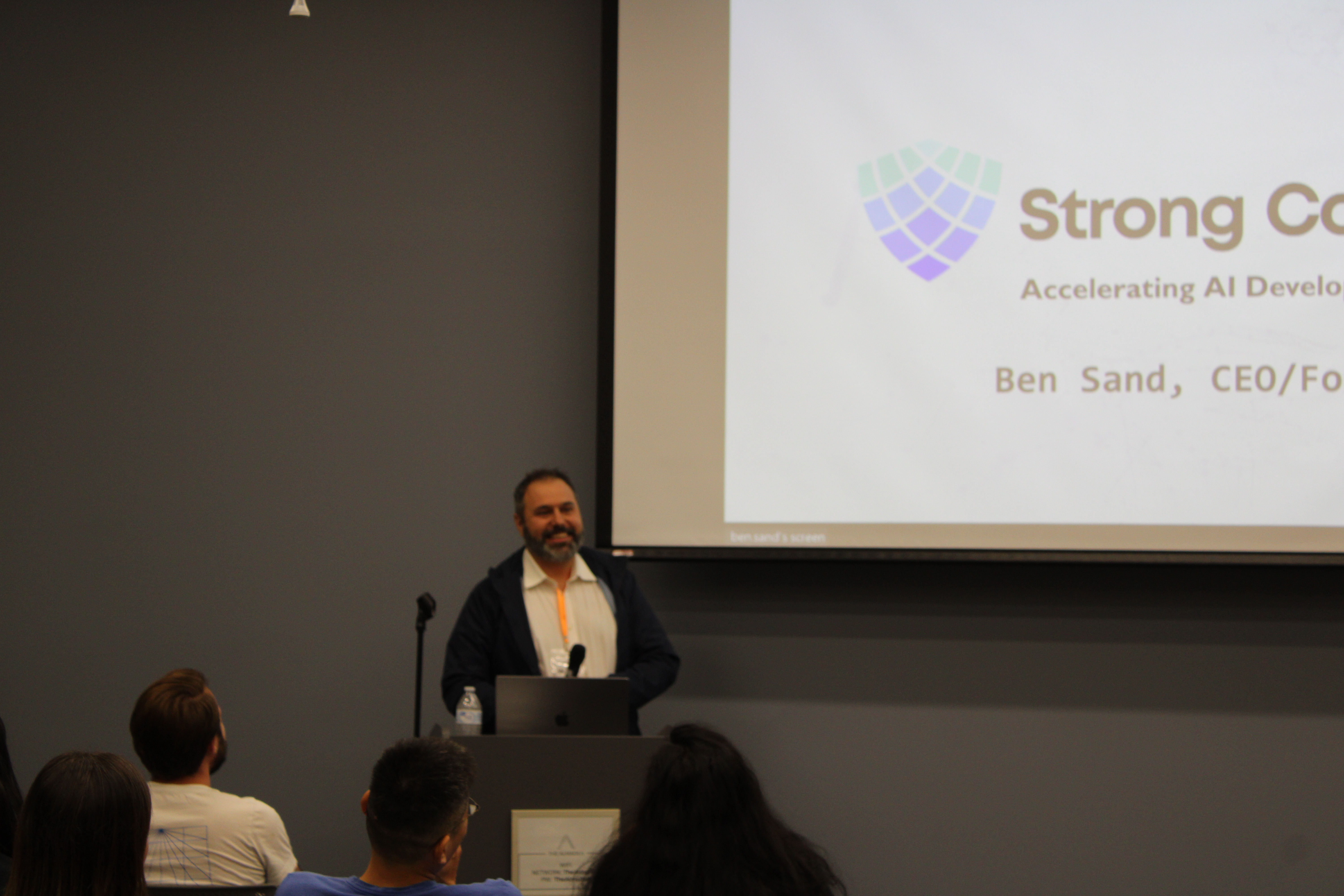
Ben explored various techniques for optimizing GPU utilization, reducing latency, and automating resource allocation in cloud-based AI systems. These strategies are designed to enhance efficiency while keeping costs under control, a delicate balance that is essential for successful cloud AI deployments.
The talk emphasized the importance of scalable and cost-effective solutions in cloud AI performance, particularly as more companies look to deploy AI at scale.
Ben's insights into optimizing cloud AI performance are invaluable for engineers and companies striving to make their AI deployments faster, more efficient, and more cost-effective.
Join us for the next AI Builder's Night
AI Builder's Night was a resounding success, providing a platform for engineers and developers to explore the latest advancements in AI technology. The event fostered valuable connections and sparked engaging discussions on the future of AI. We're excited to announce that the next AI Builder's Night will take place on September 12th. If you're interested in speaking at a future event, please fill out our speaker interest form. We look forward to seeing you there!
Special Thanks to Our Amazing Team
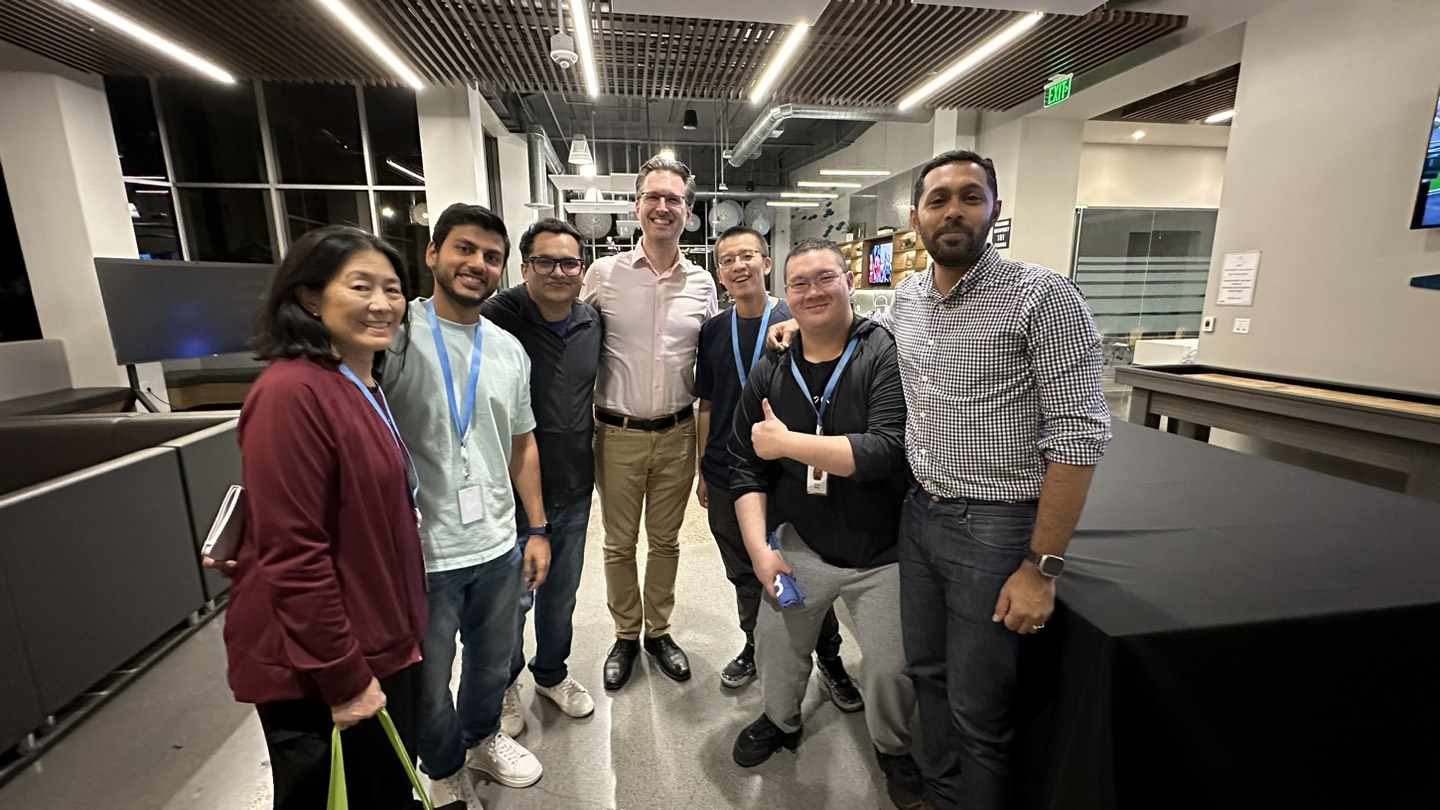
A huge shoutout to the incredible team who made AI Builders Night possible! Your hard work and dedication were key to the event's success, and we couldn't have done it without you.